



Water and electricity don’t mix - and Australia’s electrical standards take that seriously. That’s why in bathrooms, where moisture and splashes are part of daily life, we design lighting that not only looks great but keeps you and your home safe and compliant with AS/NZS 3000 Wiring Rules.
Whether you’re renovating an ensuite, updating your guest bathroom, or specifying lighting for a new build, knowing how IP ratings tie into bathroom zones is essential. Let’s break it down.
What Is an IP Rating - and Why It Matters
"IP" stands for Ingress Protection, and it’s a standard measure of how well a fitting resists dust and - crucially for bathrooms - water. The two numbers after “IP” tell you:
- The first digit = protection against solids (dust),
- The second digit = protection against water (splashes, jets, immersion).
For bathroom lights, the focus is on water protection - so you’ll often see ratings like IP44, IP54, IP65, or IP67 listed in product specs.
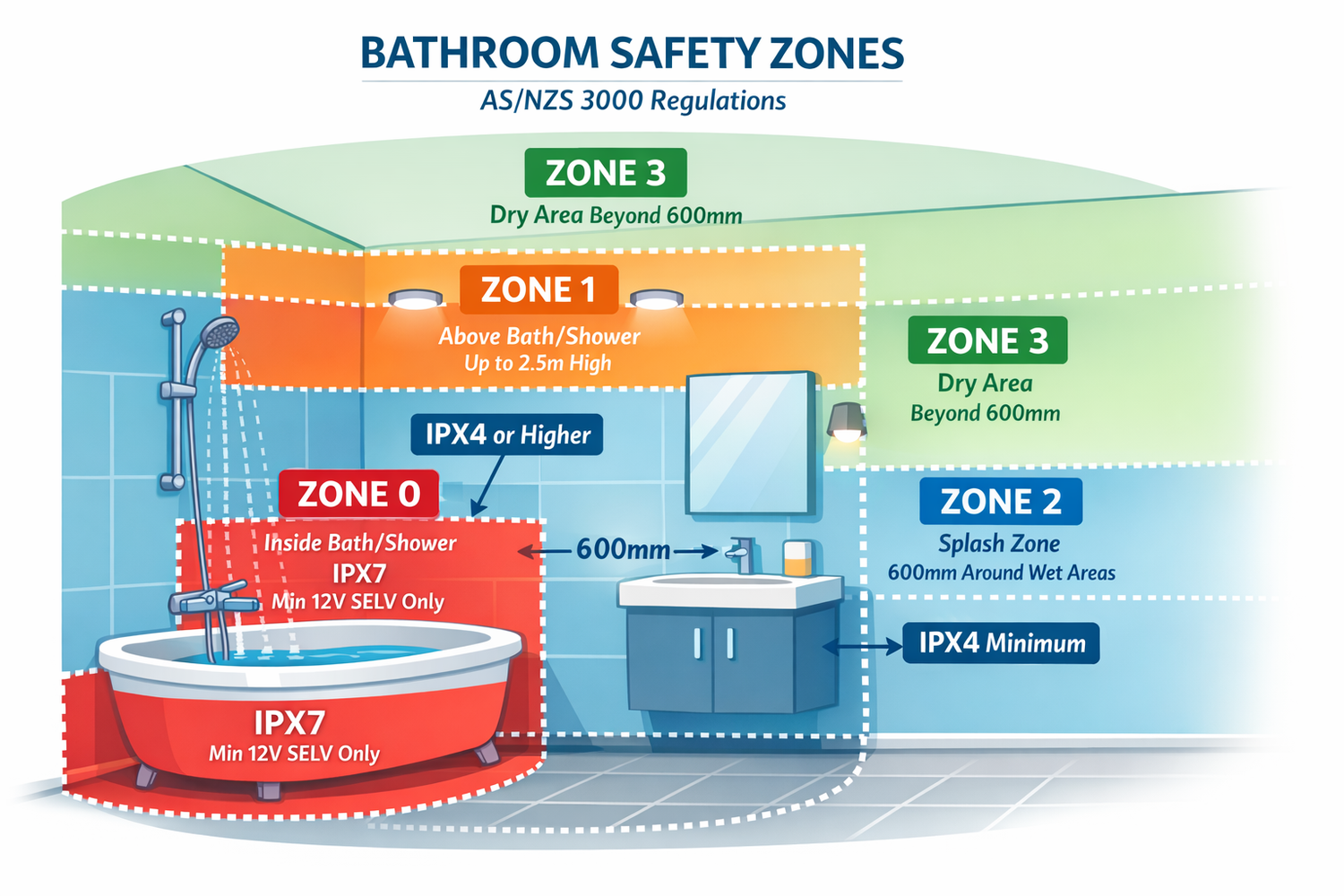
Bathroom Zones Explained (AS/NZS 3000)
Australia groups bathroom space into electrical zones based on how close fixtures are to water sources. Each zone has its own safety rules:
🛁 Zone 0 – Inside the Bath or Shower
- Where: The interior of a bath or shower base.
-
Requirements:
- Only Safety Extra-Low Voltage (SELV) fittings (max 12 V) are permitted.
- Must be rated at least IPX7 - meaning suitable for temporary immersion in water.
- Common Use: Very few lights go here - typically niche or specialist fittings.
🚿 Zone 1 – Directly Above the Bath or Shower
- Where: Up to about 2.5 m above the shower or bath rim.
-
Requirements:
- Fixtures must be rated IPX4 or higher - protected against splashing water.
- Tips: In wetter showers or open-plan wet rooms, consider IP65 rated lights for extra protection.
💧 Zone 2 – Just Outside the Wet Area
- Where: Extends roughly 600 mm beyond Zone 1 horizontally and up to 2.25 m high; also includes the area just around basins.
-
Requirements:
- Lights here still need a minimum IPX4 rating.
- Note: Switches, outlets and accessories here often also need IP protection and proper clearances.
🌿 Zone 3 – Dry Areas
- Where: The rest of the bathroom outside Zones 0–2.
- Requirements:
-
-
No specific IP rating is mandated by the standard - but because bathrooms are humid places, sealed fittings with at least some moisture resistance are still wise.
-
Choosing Ozlighting Products That Comply
At Ozlighting, we carefully label our bathroom lights with their IP ratings so you can choose the right fitting for the right spot:
- IP44 - Perfect for most wall lights and ceiling fittings around showers and basins.
- IP54 - Great choice if you want extra sealing (e.g., in steamy environments).
- IP65 - Ideal for direct shower lighting or wet walls.
- IP67 - Required only inside baths/showers where water could cover the fitting.
We make it easy to match the rating to the zone so your design stays both beautiful and compliant - and, most importantly, safe for you and your family.
Quick Tips for Australian Bathrooms
✔ Always check the IP rating before installing a light near water.
✔ If you’re unsure about a zone boundary, ask a licensed electrician - they’re required to know AS/NZS 3000.
✔ Higher IP ratings (like IP65+) add durability and peace of mind in wet spaces.
Final Thoughts
Bathroom lighting isn’t just about ambience - it’s about safety. With clear zones and IP rules under Australian electrical standards, you can confidently light every part of your bathroom while keeping compliance front of mind. Choose the right fittings, understand the zones, and trust Ozlighting to guide your design.


Leave a comment
This site is protected by hCaptcha and the hCaptcha Privacy Policy and Terms of Service apply.