



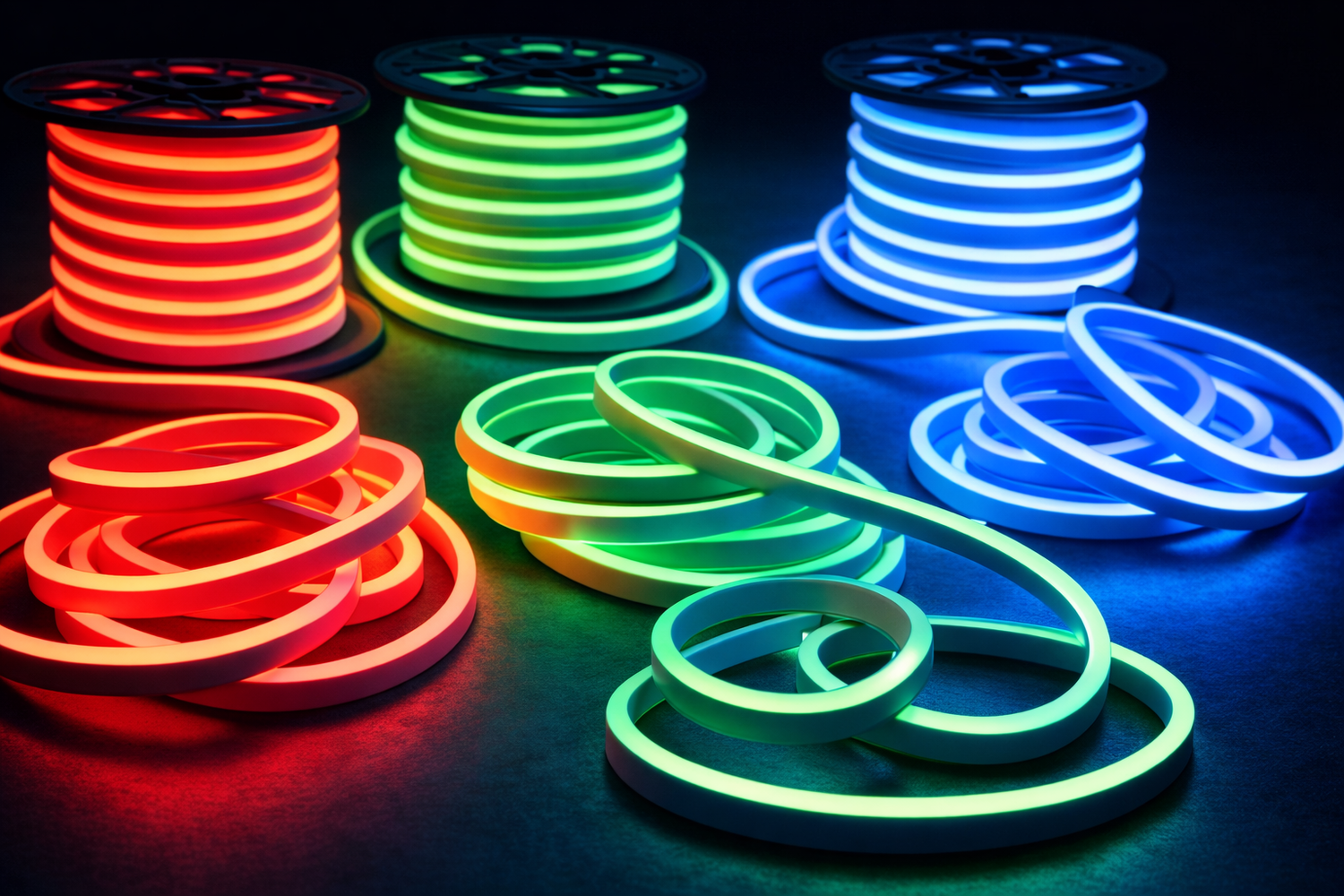
Neon Flex LED strip delivers a smooth, continuous “neon-style” glow without visible dots. While brightness and colour are the same across types, the key difference is how the strip bends and where the light is emitted. This determines which version suits your project.
Top View Neon Flex
Light Direction:
Emits light from the top surface of the strip.
Bending Direction:
Bends up and down, like flipping pages of a book. It does not suit tight horizontal curves.
Best For:
- 2D signage where curves or letters bend vertically
- Outline lighting on walls, ceilings, or architectural edges
- Front-facing shapes and lettering
- Areas where the viewer looks directly at the face of the strip
Top View is ideal for straight lines, vertical curves, and architectural accents where the illuminated face needs to be clearly visible.
Side View Neon Flex
Light Direction:
Emits light from the side of the strip.
Bending Direction:
Bends left and right, like turning a steering wheel. Perfect for smooth horizontal curves.
Best For:
- 3D letters or signage with horizontal bending
- Curved architectural outlines
- Channel letters where light needs to face outward but bend sideways
- Neat, continuous curves in horizontal planes
Side View is the right choice for rounded shapes, logos, and designs that need clean, continuous curves.
Which Should You Choose?
- Vertical bends (up and down): Top View
- Horizontal bends (left and right): Side View
Choosing the correct orientation ensures your Neon Flex installs easily and looks clean, professional, and consistent.


Leave a comment
This site is protected by hCaptcha and the hCaptcha Privacy Policy and Terms of Service apply.