




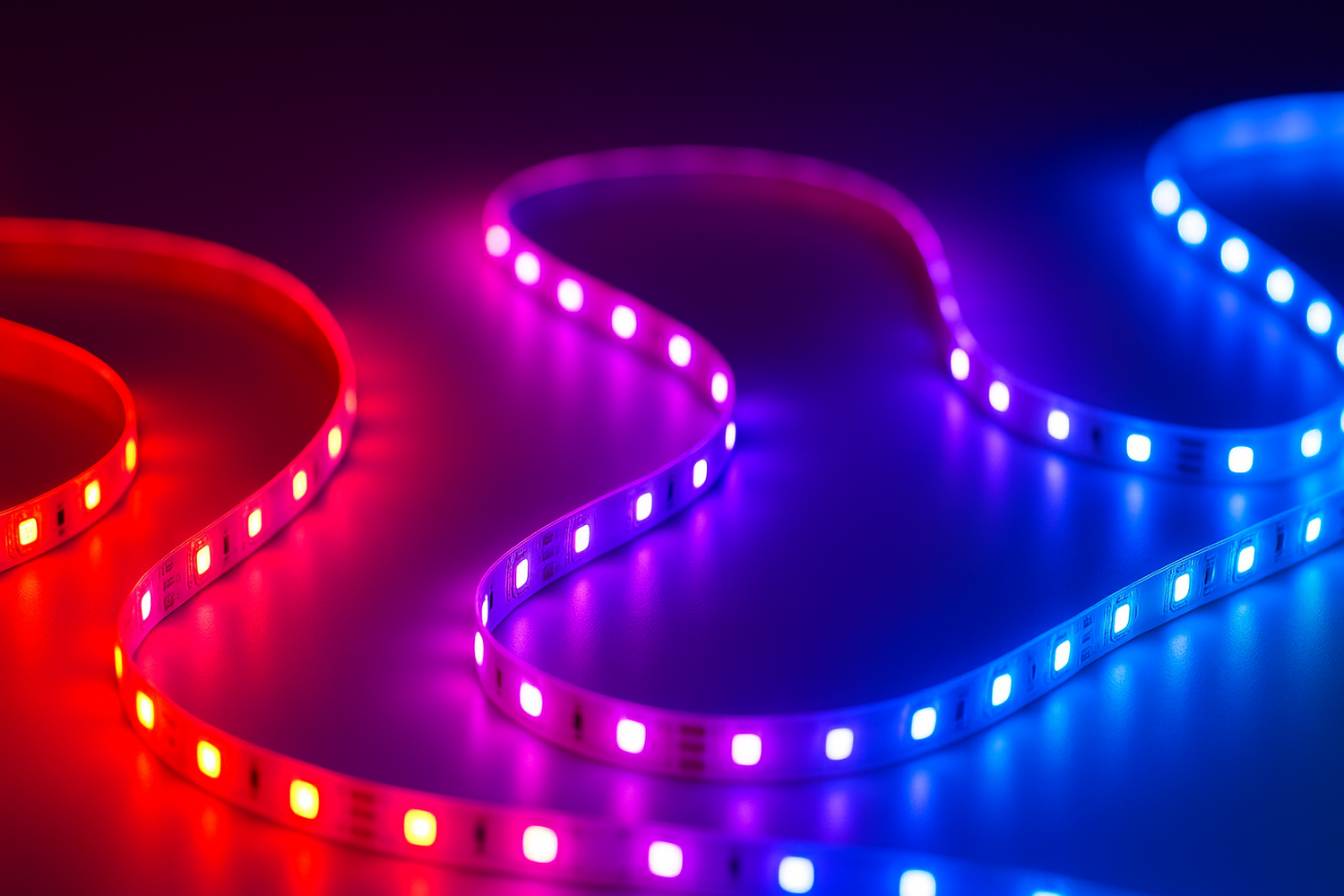
Over the last decade, the lighting industry has steadily shifted away from 12V LED strip lighting in favour of 24V systems - and for good reason. While both voltages still exist, 24V LED strip has become the modern standard for most residential and commercial applications.
Reduced Voltage Drop
One of the biggest advantages of 24V LED strip is reduced voltage drop over longer runs. With 12V strip, brightness can noticeably fade along the length of the strip unless power is injected frequently. At 24V, current is lower, allowing the strip to maintain consistent brightness over longer distances with fewer power feeds.
Longer Continuous Runs
24V LED strip typically allows for longer continuous runs before voltage drop becomes an issue. This makes it ideal for applications such as kitchen cabinetry, bulkheads, coves, shelving and commercial installations where long, uninterrupted lines of light are desired.
Improved Efficiency
Higher voltage means lower current for the same power output. Lower current results in less heat build-up in wiring and connectors, improving overall system efficiency and reliability. This also reduces stress on components and can help extend the lifespan of the installation.
Longer Lifespan and Reliability
Because 24V LED strip systems operate at lower current, they generate less heat within the LEDs, circuit boards and cabling. Heat is one of the main factors that shortens LED life, so reducing thermal stress helps maintain light output over time and extends the overall lifespan of the strip and associated components. This results in fewer failures, less maintenance and better long-term reliability.
Cleaner, Simpler Installations
Because 24V systems require fewer power injection points and less heavy cabling, installations are cleaner and simpler. This is particularly beneficial in architectural and joinery applications where access can be limited once the fit-out is complete.
Better Compatibility with Modern Drivers
Most modern LED drivers and control systems are now designed with 24V LED strip in mind. This makes it easier to integrate dimming, smart controls and automation systems while maintaining stable performance.
Is 12V Still Used?
12V LED strip still has its place - particularly in short runs, vehicles, boats or specific legacy systems. However, for most fixed lighting applications, 24V has become the preferred choice due to its performance, efficiency and flexibility.
The Bottom Line
The move from 12V to 24V LED strip lighting reflects the industry’s focus on better performance, easier installation and long-term reliability. For most modern lighting projects, 24V LED strip delivers a more consistent, professional result with fewer compromises.

Leave a comment
This site is protected by hCaptcha and the hCaptcha Privacy Policy and Terms of Service apply.